The Story
A breakthrough that can heal, expose, console, and ruin.
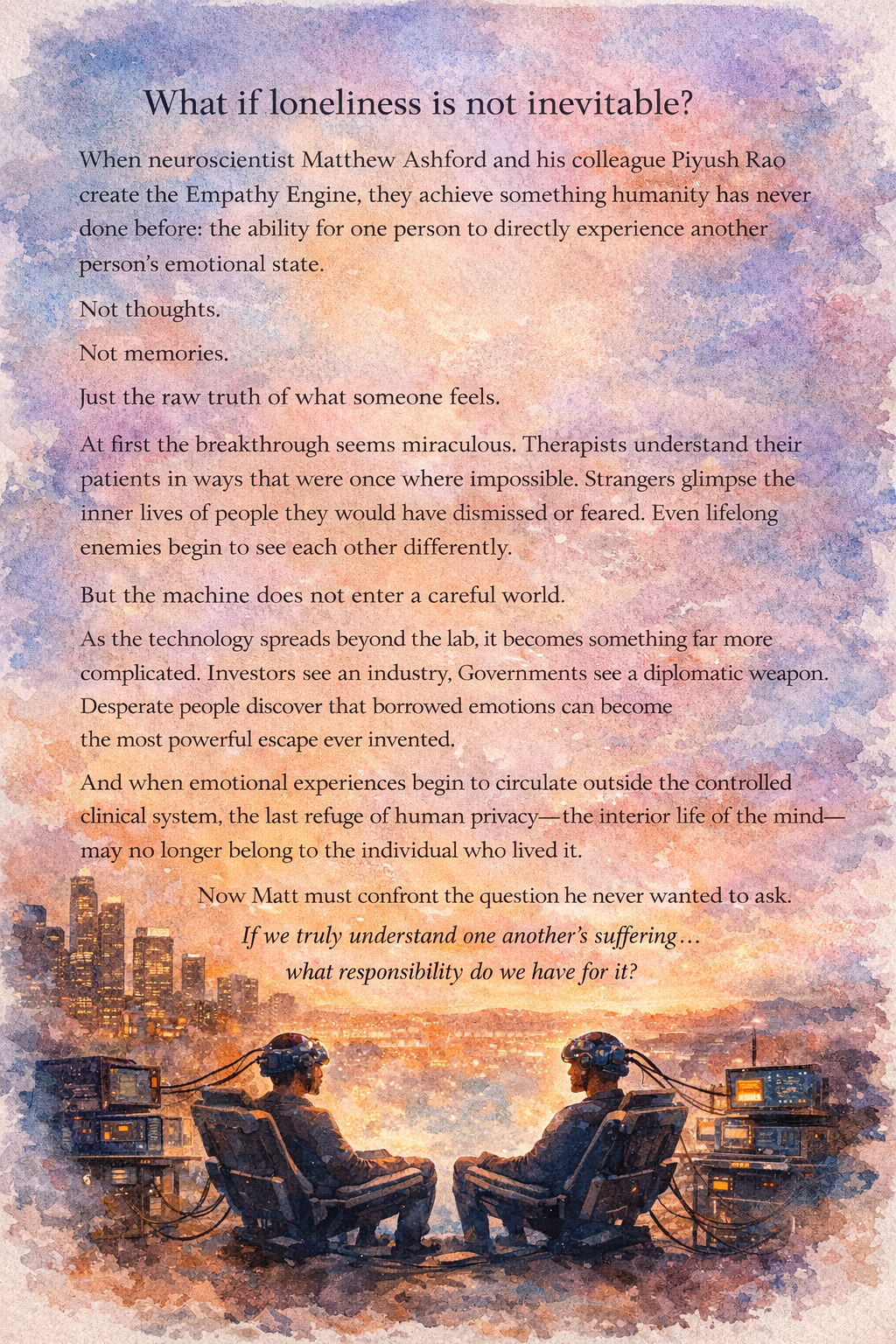
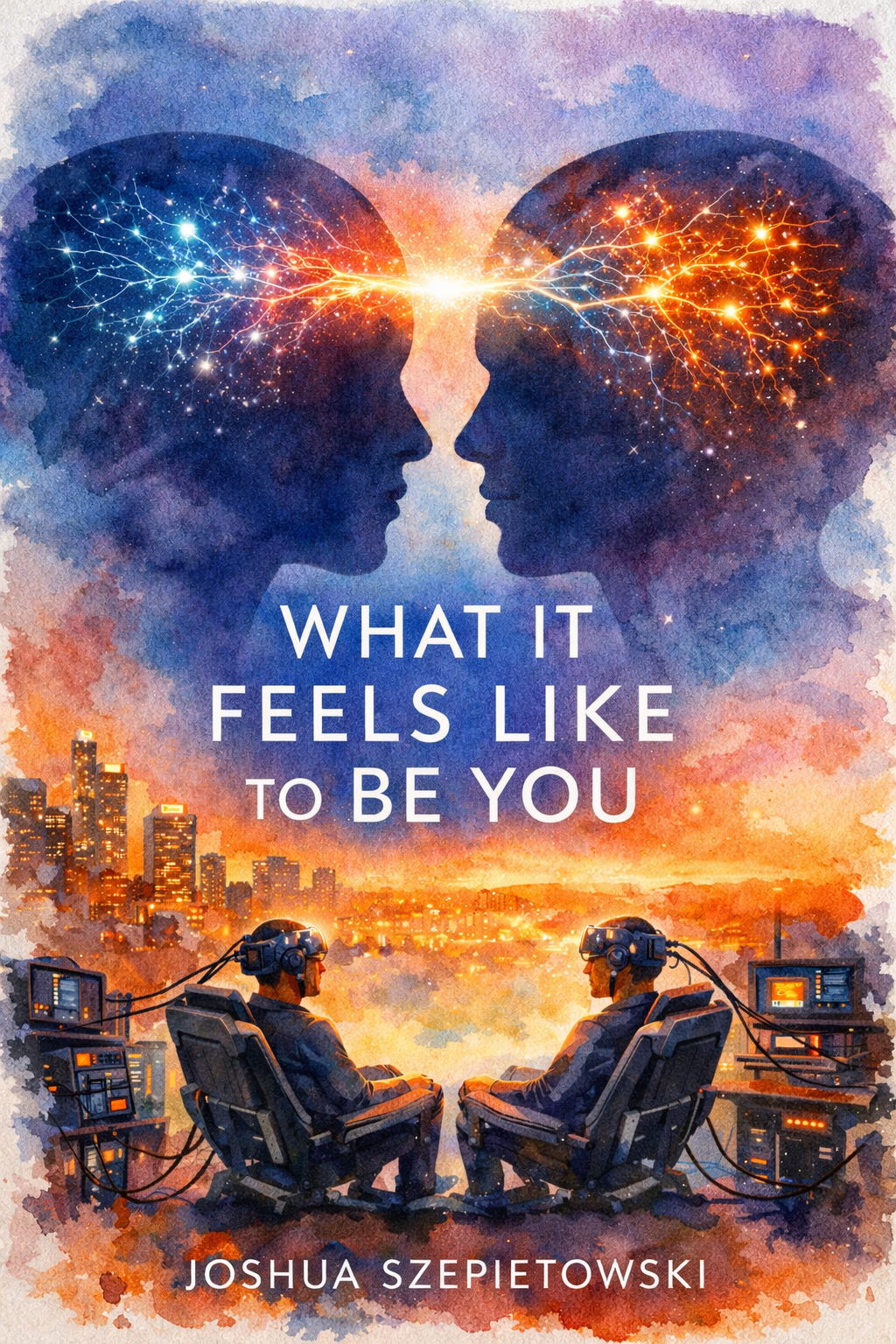
The Empathy Engine does not read thoughts or replay memories. It transfers raw emotional state: the living pressure of grief, fear, tenderness, joy, shame, and love. That bounded miracle is exactly what makes it beautiful, and exactly what makes it dangerous.
What begins as a scientific triumph and a humanitarian promise becomes something larger and more volatile once it leaves the clinic. Therapy changes. Diplomacy changes. Addiction mutates. Privacy stops feeling private. The question beneath all of it is simple and human: how much of another person should ever be directly accessible?
A Turning Point
“I thought only we buried children.”
At the novel's hinge, grief crosses a geopolitical border and proves that empathy can widen the human imagination without solving the moral work that still has to follow.
Opening Pages
The novel begins in success, with danger already inside the room.
These opening paragraphs set the emotional register: pride touched by dread, beauty shadowed by consequence, and a world that still feels recognizably human even as it tips into something new.
From Chapter 01, “The Tip”
The first thing Matt noticed, once the menus were gone and the first glass had been poured, was that he was happy.
Not relieved. Not vindicated. Happy.
The feeling arrived so cleanly it almost made him laugh.
Shelby had chosen the restaurant, which meant the room looked the way success liked to imagine itself: amber light, dark leather, a long wall of glass looking over Los Angeles. The city below was turning itself on in layers. Headlights threaded through the streets. Hills gathered their houses into constellations. Somewhere beyond what the window could hold, the Pacific lay out in the dark, invisible and still real.
Piyush lifted his napkin, dropped it in his lap, picked up the wine list, put it down, and then looked at Matt with the bright, helpless grin of a man who had accidentally helped alter the terms of reality.